One of the basic human needs is to know, to understand, and to find meaning. If we are to become whole, we especially need to find answers to the fundamental questions of life. Is there design and purpose in nature? Does human life have a meaning in itself, apart from the meanings people give it? Are there values built into the order of things, belonging not just to a particular human culture but to the very nature of things? Does a person survive death? These questions have been asked for centuries and are still being asked today.
Finding answers to such ultimate questions in the Western world today is harder than it was in past cultures. There are many conflicting answers in the various religions and philosophical groups, and little to guide us in choosing among them. In past cultures, however, learned people agreed on the basic principles on which the universe is founded; at times these principles became an integral part of the whole culture, woven into the fabric of people's lives.
A thread of truth has appeared again and again throughout history: sometimes, as in ancient Greece, openly taught and dominant in a culture, sometimes passed on secretly to the few who sought it. The principles have been expressed in different forms, and different aspects have been emphasized at different times; but their foundations have remained unchanged.
This core of understanding, this timeless tradition, is known as Theosophy, or "divine wisdom"; the term goes back to the brilliant period of Alexandria. Theosophy is often called occult or esoteric, because it is concerned not with what is open or on the surface, but with what is hidden or essential. It deals with the unseen processes and laws of nature, with what stands behind and beyond Science. It is the study of the metaphysical principles that sustain the universe.
The founders of all the great religions taught some aspects of this doctrine, and although it has been buried under misinterpretations accumulated over the ages, it survives in all modern religions. Yet it is modern in its own way: it is in harmony with the search for a world view that can integrate the tremendous explosion of knowledge in the twentieth century. Moreover, new developments in Science have confirmed many of the basic ideas of Theosophical philosophy. This philosophy is a coherent system of thought that upholds certain definite principles.
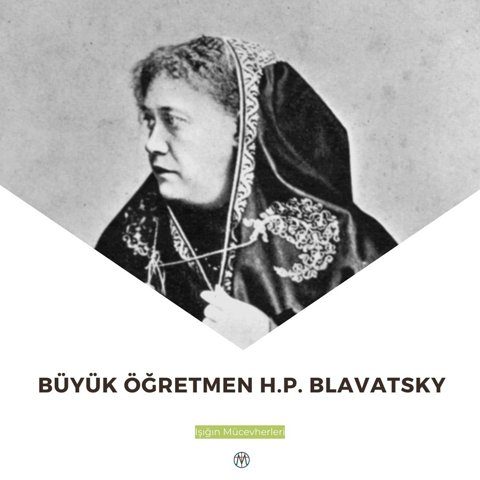
Theosophy was presented to the modern world chiefly through the works of H. P. Blavatsky, whose masterpiece, The Secret Doctrine, was first published in 1888. Blavatsky did not set out to write something new and unknown; she brought together some of the ancient teachings that had appeared at different times and places over the centuries and restated them for the West. To show that the essence of Theosophy has existed in every age of human history, she drew on the original sources of every great religion and on the science and philosophy of the major cultures of East and West. The key ideas in The Secret Doctrine can be summarized as seven fundamental principles, which may be considered to underlie all later interpretations of the Theosophical tradition.
1. The Principle of One Homogeneous Substance
The first principle is at the center of the Theosophical system; it is the axis around which everything else turns: there is a single living, nonmaterial, creative, homogeneous reality from which everything in the universe proceeds. In this view all of nature is embedded in one fundamental life, and all living things are its reflections. All the complex development the universe has reached through evolution is the outward expression of principles present in this background reality. All of nature is its expression; it shines alike in the stone and the star, in the saint and the sinner. The natural world is a ceaselessly moving veil that both reveals and conceals aspects of the eternal and changeless reality beneath it. In the words of H. P. Blavatsky:
The one prominent idea found in all the ancient teachings about cosmic evolution ... is that the whole Kosmos has sprung from the Divine Thought. This thought impregnates matter, which is co-eternal with the One Reality; and all that lives and breathes evolves from the emanations of the One Immutable ... the one eternal root.
In the world's religions this reality is called by different names: Brahman, Tao, God. But the idea that a divine principle lies at the foundation is common to most of the great religions. Lao Tzu says: "Heaven and Earth sprang from the Nameless." The great Indian sage Shankara expresses the idea in a Hindu context: "The Atman is that which pervades the universe but which nothing pervades; which causes all things to shine but which nothing can cause to shine." The idea of unity, so widespread in Eastern religion and literature, has at times gained currency in the West as well. Plato and the Neoplatonists taught this concept. In the words of Plotinus: "Each being contains within itself the whole intelligible world. Therefore the All is everywhere. Each is the All, and the All is each." The Christian mystic Ruysbroeck says: "(In the Reality the mystic knows in union) we can no longer speak of Father, Son and Holy Spirit, nor of any creature, but only of Being... Before our creation we were all one." And the Bible says: "In him we live, and move, and have our being."
Eastern religions have always seen the divine reality as an impersonal, universal life embracing nature. Christianity, on the other hand, has tended to personalize it by turning it into a human-shaped (anthropomorphic) concept. Nevertheless, many modern Christians influenced by existentialist theologians such as Paul Tillich have developed a conception of God that coincides with the Theosophical view. By "existential being" these thinkers mean the part of a person or of nature that exists in the world of actuality; by "essential being" they mean the inner essence, the full potential at the ground of being, that is, God. God thus becomes an abstract yet real, infinite potential, partly expressed in the world of actuality. Through the influence of Buddhism, Zen and Vedanta in the West, this idea is spreading and offers many thoughtful people a conception of God that is both satisfying and consistent with what they know about reality. The underlying brotherhood of all people follows necessarily from the idea that there is a single divine source for all. This is the basic concept of Theosophical philosophy and the chief aim of its students. The world's greatest religious teachers have held this belief and compassionately devoted their lives to helping people through their teachings.
In H. P. Blavatsky's time, while Theosophists were working for the recognition of brotherhood, a separatist attitude and a sense of white racial superiority prevailed in parts of the world. But the pressures of the twentieth century make it necessary to accept the indivisibility of the human family. We have learned through bitter experience that a shot fired in Southeast Asia or Africa will echo around the whole world, and that the destinies of nations are inseparably intertwined. We have seen that the suffering of any minority group concerns the whole of society. Improved transportation and communication have made cooperation among communities and nations everywhere a necessity. Such a worldwide expansion of the web of relationships is new in history; it compels us to accept the principle of brotherhood, the underlying unity of all humanity, and the need for mutual respect and concern among peoples. Although this Theosophical idea is still far from being fully realized in the world today, it is slowly gaining ground through the work of organizations such as the United Nations.
The idea of underlying unity implies that all of nature is interrelated and that the human being is, in essence, a part of it. The Eastern view gives the sense that man flows with the processes of nature and takes part in them; Chinese painting and poetry in particular reflect this idea with poignant beauty. Today evidence of the basic unity in nature comes from the science of ecology, which reveals the strong webs of relationship among living things in every kind of environment: forest, desert, sea. In the West, however, with the rise of highly modern societies, man has become cut off from nature and has often exploited it for short-sighted ends. Experience has shown that man is the worst of predators, thoughtlessly interfering with the balance of nature and destroying precious resources. Air and water pollution, a consequence of modern man's technological development, has become a problem for the whole world. If we want to survive, we must learn to live within nature's law of unity.
Psychologists and philosophers have drawn attention to yet another area in which we pay the price for violating the principle of unity. They point out how much of the physical and psychological distress of our age stems from the noise and nervous strain of city life, from man's loss of contact with the soothing and refreshing influences of nature. Wordsworth recognized this tragedy long ago.
Slowly we are learning the need to attune our lives to the whole of nature and to the fundamental relationship between man and nature. "The substance-principle from which the visible world emerges" may not be recognized by science as "divine"; but modern cosmologies point to the view that creation arose from an undifferentiated substance or principle: "The void of the universe reveals itself as the cradle of matter."1 This recalls the poetic account of creation in the book of Genesis: "In the beginning God created the heaven and the earth. And the earth was without form, and void; and darkness was upon the face of the deep." According to the Theosophical view, which is also found in Eastern religions, the universe was born from the void, which is in fact a plenum (a full space).
2. The Periodic Manifestations of the One Life
According to the second proposition of Theosophical philosophy, universes come and go; they are periodic manifestations of a changeless, nonmaterial reality. In the ancient view the phenomenal world is an outpouring of boundless space. This space is far from being an empty void without qualities: it is a fullness, a continuum with the qualities that give rise to matter and energy, to consciousness and life. The first impulse that sets this outpouring in motion starts the long processes of differentiation we call evolution. The process will continue until the final stage of both physical and spiritual growth is reached. According to H. P. Blavatsky, "The Secret Doctrine teaches the progressive development of everything, worlds as well as atoms; and this stupendous development has neither conceivable beginning nor imaginable end."
As astronomers discover that stars and galaxies are born and die, they are revealing part of this periodic manifestation. The birth and death of stars and universes is one example of the very long evolutionary arc in nature; but the same cyclic process of "periodic manifestation" can be seen everywhere: egg, caterpillar, cocoon and butterfly; the drawing in and letting out of breath; trees putting out and shedding their leaves; night and day; the rise and fall of the tides; water evaporating and rising, becoming cloud, falling as rain; the electron circling the nucleus; the birth and death of a human being. These and many more are cycles of very different lengths. Each is a rhythmic manifestation of the One Life within a great cosmic symphony, in which an unseen, guiding intelligence brings countless tempos into harmony within a single, many-layered overall concord.
3. The Changing World and the Changeless
The next proposition, closely related to the second, is this: even a universe billions of years old is brief and transient compared with the eternal and changeless One. Behind this polyphonic, ongoing symphony stands the timeless, changeless source of being.
Modern physics echoes something like this idea in the concept of the electromagnetic field. The effects of this field can be seen when iron filings sprinkled in a magnetic field line up along the field's lines of force. Electrons in a magnetic field likewise move in spirals around the lines of force and reflect the field. The field governs how the particles within it move and behave. Although the strength of the field may vary at a given moment and place, the field itself is changeless, eternal and nonmaterial; it is present everywhere in space whether or not there are particles for it to act upon. The field potential is therefore universal, continuous and changeless. This gives a vivid and realistic picture of the changeless, nonmaterial reality behind nature, the ground of being, the powerful influence of God. It gives an idea of how the underlying intelligent life has guided the universal process of the unfolding of its own potentials through the ages.
4. Guiding Principles in the Universe
Examples such as the magnetic field have, in the twentieth century, also made another ancient Theosophical view credible: the universe works and is directed not by chance but by inner guiding principles, from within outward. This idea is firmly established in modern physics. We know that what appears solid, static and fixed to our senses is actually a harmonious dance of electrical forces, and that the structure and behavior of matter are governed by invisible electromagnetic and gravitational fields.
In biology too the idea of an inner guiding principle is emerging, under the name of self-representation (self-display). For example, the exotic colors and patterns of sea snails living in the depths of the ocean seem to make no conceivable contribution to the snail's survival; yet this beauty costs the snail considerable energy. The principle of self-representation is seen most strikingly in embryonic development: starting from its first cells, the embryo passes through several stages that are the same in all mammals, but in the end the body plan and instinctive makeup peculiar to its species emerge.
The idea of self-actualization in psychology can be thought of as the counterpart of the biological idea of self-representation, but one that has gained new dimensions. According to this view, the purpose of life for every human being is to unfold all his or her inner potentials, such as creativity, love and intelligence, as fully as possible. Here the inner guiding principle of development is unique to each individual and brings about psychological, mental or inner growth as well as physical and biological development.
These new scientific concepts, voiced long ago in The Secret Doctrine, show some of the inner guiding principles that shape life, humanity and the world of matter. They support the Theosophical understanding that the vast, ongoing process of the universe is lawful and orderly, directed from within by an innate intelligence or universal mind. Here nature is seen not as a haphazard, mechanical event but as an organized, evolutionary process with a definite direction. The whole flow is moving toward the development of ever more complex forms, which reveal ever richer expressions of consciousness.
5. All the Kingdoms of Nature Have Consciousness
The underlying unity of life implies that there is no separation between consciousness and matter. Theosophy holds that everything in the universe, with all its realms, is conscious; that is, everything is endowed with a consciousness of its own on its own plane of perception. Through the ages mystics and poets have voiced their rapturous, intuitive feelings about the life of the flower, the rock, the stream and living creatures.
The scientific work of the Jesuit paleontologist Teilhard de Chardin went so far as to show that consciousness has been inherent in matter from the beginning and that its expression increases as ever more complex forms evolve. What he called the within of things is the conscious, inner, subjective side of matter and organisms. There is experimental evidence that life, together with simple consciousness or the capacity to respond to stimuli, arose from nonliving matter. In experiments simulating the conditions of the early Earth, amino acids, the building blocks of proteins, formed spontaneously. In further experiments the amino acids combined spontaneously to form proteinoids, complex molecules closely resembling natural proteins, the building blocks of protoplasm, the substance of living things. As evolutionists discover that the root of consciousness lies hidden in matter itself, the duality of matter and consciousness is disappearing. This too is in keeping with the Theosophical view. As the psychologist Gardner Murphy pointed out, this does not belittle the flowering of consciousness in man; on the contrary, it ennobles primitive matter.
Other fascinating and strange work in physics shows that something almost like choice manifests itself in matter. For example, radioactive cobalt nuclei emit more electrons in one direction relative to their axis of spin than in the other. Physicists have drawn very important conclusions from this strange finding. These studies also appear to provide evidence for the next proposition.
6. Purposefulness in Evolution
In the Theosophical view, the whole order of nature is evidence of purposefulness in evolution. Teilhard de Chardin traces such a thread through paleontology, the study of fossils, and shows that consciousness grows richer as forms become more "complexified." He, the biologist Julian Huxley and others maintain that man's physical evolution has come to a standstill and will undergo no further significant change, and that evolution is now concentrated in the mental and moral sphere. This view reflects the Theosophical view.
The Secret Doctrine outlines the development of humanity over immense periods of time; each stage reveals an aspect or a special quality of the one unseen consciousness behind the universe. It sketches a vast scheme of evolution for human beings, stars, planets, various beings and even minerals. All of these, for a time, realize and express part of the immense and inexhaustible potential of the background reality. Forms come and go and change; over time, through trial and error, they slowly develop until they can reveal more of the divine consciousness hidden in the heart of nature. In the words of The Secret Doctrine: "The whole order of nature evinces a progressive march towards a higher life."
7. Cycles for Humanity
From the Theosophical point of view, man is part of this whole flow of evolution; but present-day humanity is far from maturity in the evolutionary sense. When existentialists speak of the realization of essential being, they are in harmony with Theosophy. Theosophy too sees the human being as a partial expression of the ground of being; man is destined to unfold new dimensions of this background reality, which is his essential nature. The Christian mystic Meister Eckhart expressed this idea as follows:
The seed of God is in us. Given an intelligent and hard-working farmer, it will thrive and grow up to God, whose seed it is; and accordingly its fruits will be God-nature. Pear seeds grow into pear trees, nut seeds into nut trees, and God seed into God.
According to Theosophy, the human being is a boundless potential, one with and identical to the divine life. Through the ages mystics have testified to the inner power that enables a person to know directly, within, that he or she is one with the unseen creative background, that is, with God. Existentialists, for their part, have stressed that the individual uses this divine potential, hidden in his talents and abilities, rightly and productively when he expresses it by engaging in useful work and developing his relationships with others. Theosophy, however, holds that man's long-term aim of realizing his true self is not confined to the brief span of a single life.
The seventh principle of Theosophy affirms that every individual is in essence one with the universal Over-Soul and states that each passes through cycles of reincarnation in accordance with the law of cause and effect. This is an ancient view held today by more than half the world's population: just as trees have a cycle of flowering and seeding, so human beings have a cycle of reincarnation. The law of cycles seen in nature shows itself in man as death, rest and rebirth. An individual lives countless lives in many races and cultures, sometimes as a man and sometimes as a woman, in many walks of life. Just as subhuman forms develop through evolution and provide a basis for a more advanced consciousness, so the human mind, emotions and body slowly develop through ages of life and experience and so become able to bring new dimensions of the divine life into expression.
According to Theosophical philosophy, the interests, relationships and abilities of one life also echo in future lives in accordance with karma, the law of cause and effect. The mental and emotional forces set in motion inevitably return to the individual in a future life. Both the gifts and the obstacles of a life are the result of how energies were used in the past, and they bring opportunities or frustrations to the individual's urge to realize his deeply buried possibilities. But the whole flow of evolution pushes him forward, sometimes gently and sometimes forcibly, and in time releases more of the powers locked within him. Theosophy sees humanity as a whole slowly becoming more effective, more creative and more loving, so that the human being of the future will be as far beyond us as we are now beyond the cave man. Throughout history there have been individuals whose greatness has shown what man can become and who are forerunners of the future growth of all.
Theosophy offers no shortcuts or cure-alls for the difficult and complex problems of our age. But it offers a hopeful, long-range view of ultimate fulfillment for all people. Its concepts restore purpose and meaning to the universe and to humanity and give a person a firm foundation on which to build a life. These ideas speak to the deep, partly unconscious urge within every person toward progress and growth, toward unfolding one's potentials in productive work. As a person directs his life toward this aim, he begins to feel and understand more and more within himself the underlying reality of these eternal ideas and their guiding power in his life. Life will not necessarily become easier for this; but he will learn the unique rewards of aligning his life with the creative source of being and moving consciously with the evolutionary flow.
Notes
-
Max Gorbuny, Seven States of Matter. ↩