There is one occultism, one truth. The Brotherhood of the Masters, the fount of wisdom in this world, is the spiritual heart of the world; from this center influences of inspiration and illumination flow out unceasingly. All aspects of truth in the religious and philosophical systems of the world have derived from this one sublime source. From this source there come forth from time to time not only the great sages and teachers who guide humanity, but also envoys and agents, known or unknown, who work in the world for the benefit of humanity.
This fount of wisdom is made up of the noblest spiritual and intellectual souls that humanity has so far produced, men who have become one with the god within them. They know one another, come together, and so form the great school of light and truth, the great Brotherhood. They have been known by different names in different ages. In Buddhist lands the higher beings among them are known as Dhyani-Chohans1; the ancient Persians called the members of this solar hierarchy the Amesha Spentas2. Jewish mystics and Kabbalists speak of them as the Bnei Elohim, meaning "Sons of God"; in other lands, as in ancient Egypt, they are called the Sons of Light or the Sons of the Sun.
Schools Born from the Parent Source
Countless schools of occultism derived from the parent school have existed in the past, exist today, and will exist in the future. The Mysteries of the Greeks were such a school, and so were the mysteries of the Persians and the Egyptians. The mysteries practiced in ancient America, as in Peru and among the Maya, were also schools of the same sacred tradition. Tibetan Lamaism and the Vedanta of India, while also being exoteric systems of philosophy, are in essence schools of occultism.
The Rosicrucians of the Middle Ages were originally a mystical, Theosophical and semi-esoteric body; the French Martinists, who still exist today, also form one of the "occultist" schools. Besides these there are groups in India, Asia Minor and Europe engaged in so-called alchemy; although their followers have a certain spiritual aspiration, they are even more interested in power and extraordinary phenomena. There are also, in the East, many semi-occult groups, some large and some small, which study in their own ways the various remnants of mystical literature that past ages left in those lands. In Iran, Egypt, Syria and some parts of Türkiye there are similar bodies, generally very closed, and of most of them nothing at all is known.
In every land and in every age all such bodies do a certain amount of good in their own way, in proportion to the amount of the ancient wisdom they teach. But the truths these groups pass on are often seen through the distorting mental prisms of those who wander around the fount. These bodies may rightly be counted schools of occultism to the extent that they faithfully transmit the light they have received from the parent school. Let us add this: there are in the world today, on each of the great continents, a few, indeed very few, genuine esoteric schools connected with the Brotherhood.
The Language of Myths and Epics
A few intuitive scholars have suspected that esoteric teachings existed in the ancient Mystery schools, but these teachings have not yet been brought to light as a coherent whole. Here and there in various books of antiquity we find hints and allusions; but a logical and clear exposition of these teachings is kept where no uninitiated student has so far consciously been able to enter.
In order to record profound truths for later generations, the ancient sages and seers often placed them as metaphor and figure within fantastic and intriguing narratives: such was the case with legends, fairy tales and mythological stories. Plato, for example, used myths to give many guarded hints about the subjects taught in the Mysteries. Because he knew what he was doing, had permission to do it, and did it under the cloak of allegory, he did not violate the spirit of his oath of secrecy.
The great teachers of past ages wrote letters to one another in such esoteric terms and passed their books from hand to hand. Initiates could understand what they read; for them the text was plain and clear. But for those who had not been admitted within "the temple walls," these teachings were only a speculative philosophy, perhaps meaningless jargon.
The mysteries of these wisdom teachings have been passed on in direct succession from sage to sage since the moment when the first contact was made between divine beings and men in the late Lemurian and Atlantean periods (according to Theosophy, the two great phases of humanity that preceded present humanity, and the lost continents on which they lived). This step had become necessary because humanity had lost the power of direct and conscious communion with its divine progenitors. So men were taught to raise their souls by an effort of will united with intense aspiration; as a result they were able to enter spiritually and intellectually into direct relation with their own inner god or with some other divine being. The loftiest truths about man and the universe were perceived in this way and then, in the phrase of the Vedas, "spoken," that is, put into human language.
Why, then, is spiritual teaching written in martial language in almost all the ancient sources? The Bhagavad Gita, for example, tells of the conflict between the opposing armies of the Kauravas and the Pandavas. In Germanic and Scandinavian mythology there is constant war between gods and heroes. It is the same in Greek, Egyptian, Persian and Babylonian mythology; they are all alike in this respect.
The answer to the question is simple: we give picture books to little children. To those who cannot grasp the meaning of peace and silence and the immense power that lies in them, we speak of war, for in war there is always a winner and a loser. So in the literatures of the world, in keeping with the mental character of those ages, the secrets of mystical truths were written into epics. Behind all this, however, there were esoteric schools that taught truth and compassion more directly, as Lao Tzu3 did in China: "The way of Tao is not to strive." This is the very opposite of quietism (the mystical attitude that counsels giving up all effort and withdrawing into passive submission). For quietism is often a spiritual bewilderment, whereas a man's whole effort should be to embody, in his own life and in every particle of his being, a spirit of active compassion toward humanity.
Just as the first esoteric bodies became the great religious and philosophical schools of the past, so the present Theosophical Movement is intended to be the spiritual and intellectual source from which the great philosophical, religious and scientific systems of future ages will be born; in a sense, the heart of the civilizations of future cycles.
Theosophical Movements and 1875
In every important age Theosophical movements have been founded in various parts of the world. Very few of them have achieved their aim. Most lived for a time; some did good and accomplished part of the work that had to be done, then failed and turned into a church, a sect, a dogmatic set of beliefs. These periodic efforts to instill the ageless ancient truths in the hearts of men will continue until men are ready to welcome the light when it comes and to honor it as the most precious gift they possess.
This is why, in 1875, two persons with Buddha-like souls entered upon the struggle of taking upon their own shoulders, in a sense, the karmic responsibility of sharing a new message. Spread by the innate influence of these persons and by the persuasive power of the truths they conveyed, the message led people to think. From that moment science began to carry the sparks of new ideas, new aspirations were instilled into the thought-atmosphere of the world, and at the very least the ideal of working for an ultimate universal brotherhood among all peoples took firm root.
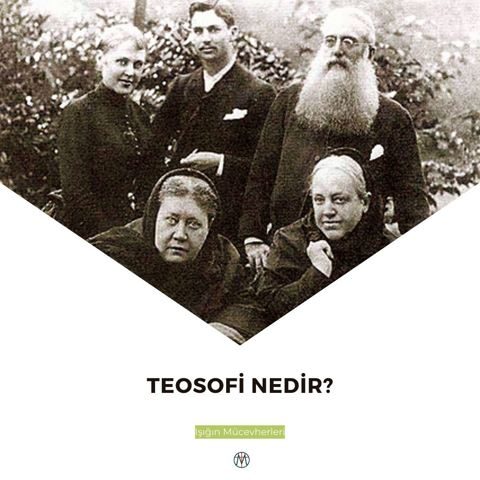
The chief aim was to make these old spiritual principles work like leaven in the dough of human thought, in the religious and philosophical strata, and finally in the structure of society itself. H. P. Blavatsky was inspired to write her masterworks Isis Unveiled and The Secret Doctrine. She did this not to found a new religion but to restate, once again and in full, humanity's ancient wisdom tradition together with its more esoteric aspects. She was thus one of the links in the succession of teachers who come at certain periods to transmit esoteric light and truth. She came at the close of an old cycle and the opening of a new Messianic cycle, and so was a herald of the coming age.
The Golden Chain
This succession of teachers, one following another, has continued through countless ages. There is nothing surprising in this. Just as generations follow one another, and in the course of evolution one species follows another, so there is a chain of sages who keep the stream of truth flowing through the ages. This is a simple instance of one of the laws of nature.
In Sanskrit texts this is called guru parampara (an unbroken chain of transmission from teacher to teacher), and it is of two kinds: first, the chain of sages who rise, as it were, one above another in wisdom and spiritual stature; second, the chain of men in the outer world who follow one another in a single line through time. The same pattern of flow was known to the Greek poets and philosophers, to Homer and Hesiod, who spoke of the Golden Chain linking Olympus with the earth. Later Greek mystical writers spoke of it as the Hermetic Chain.
The torch of light has always been passed from hand to hand, and will continue to be passed, as long as the call rises from the hearts of men. When this call ceases, the chain of succession remains unbroken, but the teachers no longer work openly and visibly. The guardians of humanity, whatever you call them, Masters, Mahatmas, or the great elder brothers and sisters of the human race, work wherever they see the slightest opportunity to do good, and continue to labor to develop the spiritual nature of their human brothers. Every body, every group of people or every individual trying to follow a lofty path in life will receive their help, if worthy of it. Worthiness is the test, the only test. When the search is true, the answer is given. But a call made only for personal gain is certainly not the right call.
The Right Call
The only call the Masters can recognize is the call of those whose hearts long for light, whose minds seek wisdom and whose souls vibrate with compassion. Moreover, this call must be made only for the purpose of gaining the wisdom and light needed to serve humanity. There is not a single sincere heartbeat that goes unanswered, not a single yearning of the soul that is not faithfully recorded. The Brotherhood of the Masters is the guardian and keeper of the ancient wisdom; its members are pledged to keep this wisdom in secrecy and silence until one comes who knocks at the door in the right way. They in turn receive the light from those higher than themselves. Thus Theosophy, the wisdom of the gods, is passed on to men along the Golden Chain of Mercury, and will go on being passed on forever.
Notes
-
Dhyani-Chohan (Dhyan Chohan): a term of Sanskrit-Tibetan origin used in Theosophical literature for the lofty spiritual beings, the "lords of light," who govern cosmic order and evolution. H. P. Blavatsky uses this term extensively in The Secret Doctrine. ↩
-
Amesha Spenta ("Bounteous Immortals"): in the Zoroastrian tradition, the six (seven with Spenta Mainyu) exalted beings who stand beside Ahura Mazda and represent his divine qualities. The original text has "Amsha Spends." ↩
-
Lao Tzu (Laozi): the Chinese sage regarded as the founder of Taoism, held to have lived in the 6th century BC; the Tao Te Ching bears his name. Tao means "the way" and denotes the principle underlying the universe; the saying quoted here points to the Taoist principle of wu wei (effortless, spontaneous action). ↩