Spiritual and astral forces have been continually at work since the earliest ages of the world. In human history, however, there have been certain periods when the doors between our physical world and the inner realms were partly opened and people became more open to these subtle influences. At present we are leaving behind an age of materialistic life and thought and entering a more spiritual period. On the other hand, the world is full of signs of an outbreak of psychic influences. These influences are always deceptive and dangerous, for the astral realms belong to a lower layer of material existence, filled with evil emanations from human and other sources.
Indeed, the period we are living in is one in which spiritual and astral energies are accelerating. We stand at the point where two great cycles intersect: one is ending and the other is beginning. In parallel with this transition, people's minds are changing rapidly and becoming more sensitive psychically. In this there is great danger; but if human consciousness turns toward higher things, there is also the opportunity for faster progress. For this accelerated change is very powerful, especially where spiritual forces are concerned.
This is not the first time such a thing has happened on our planet; it has happened in the past too. During the decline of the Atlantean race an immense effort was made, and it culminated in the founding of the Mystery schools, which long afterward found expression in the various mystical, religious and philosophical centers of the ancient world. When we study the sacred scriptures of the world, we find that the oldest of them contain the ancient esoteric teachings in their full scope.
The reason is this: since the submergence of the last island of the Atlantean system of continents (Plato records that it took place about 9,000 years before his own time), materiality has steadily increased in the world, while spiritual impulses have grown ever weaker until they reached stagnation. This cycle, however, as has been said, has recently come to an end. The period we are entering is most unusual, for it belongs not only to the 2,160-year cycle (the length of an astrological age) known as the "Messianic cycle," but to a span of ten to twelve thousand years.
Great events are taking place, for the whole modern world is approaching a historically critical point. There is quite literally a war going on between the forces of light and the forces of darkness. On which side of the line dividing spiritual safety from spiritual degeneration the scales of destiny will fall is a matter of the most delicate balance.
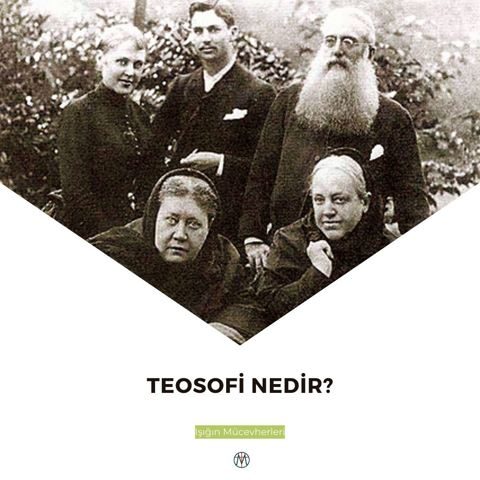
H. P. Blavatsky, in a letter written shortly before her death, gave this warning:
Psychism, with all its allurements and all its dangers, is necessarily developing among you, and you must beware lest the Psychic outruns the Manasic [belonging to Manas, the thinking principle of mind] and Spiritual development. Psychic capacities held perfectly under control, checked and directed by the Manasic principle, are valuable aids in development. But these capacities running riot, controlling instead of controlled, using instead of being used, lead the Student into the most dangerous delusions and the certainty of moral destruction. Watch therefore carefully this development, inevitable in your race and evolution-period, so that it may finally work for good and not for evil.1 Unfortunately, as in every age that has lost its link with spirituality, people today long for these energies, for the development of dubious and little-understood higher faculties, and in their blindness they seek them outside themselves. Because their hearts are hungry for answers to the mysteries of life, they take whatever they can find from self-advertising teachers who announce that they teach how to acquire and use psychic powers. Yet such "teachings" are always bound up with personal gain and deceive their followers. It is hard to speak of this subject without hurting the many innocent and trusting souls who, not knowing the truth, run after what looks to them like the sign of a life greater than their own. This also explains the existence today of the many psychic and semi-mystical movements2 which in most cases turn people away from the light radiating from their own inner god instead of directing them toward it. We must always be careful in these matters. The waves of the astral light are extremely untrustworthy, and thousands follow the glimmerings of the psychic light instead of the never-fading splendor of the divine presence within them.
The plain truth is this: the West is being misled by psychic teachings of no lasting value. Ninety-nine percent of those who follow these practices are spiritually untrained people of psychic temperament, and so they easily fall prey to the illusion (Sanskrit Maya) of psychism. This does not mean that these faculties and powers are evil, that they are not natural parts of the many-layered human constitution, or that they are useless. What it means is this: they are very dangerous for anyone who lacks a spiritual outlook and the reason and spiritual will to guide and control the psychic nature in which these faculties reside.
Hatha-yoga practices of the psycho-astral kind are dangerous too. They are usually connected with bodily postures and the like, and some people become dependent on these practices in order to gain powers of a lower kind. These practices not only affect the mind, even unseating it from its normal place, but also damage mental health and can interfere with the pranic (vital-energy) circulation in the body. Religious fanatics often lose their balance. Some sensitive people, usually ignorant ones, become so-called "ecstatics," regarded as examples of a holy life merely because their skin can bleed and wounds supposed to represent the crucifixion appear on their hands or feet. The same may be said of the fakirs and lower yogis of the East. These practices can have consequences that endanger the mind, the health and even life itself. In none of them is there a single breath of spirituality.
The person who sets out hoping to gain powers and who regards powers as something very important is doomed to failure. Such a person enters a very dangerous and dubious path which at worst may lead to sorcery and black magic, and at best will bring only the disappointment of the "Dead Sea apple" (a legendary fruit, fair outside and full of ashes within). Such powers, whether spiritual, intellectual or psychic, will develop in time and quite naturally as we progress. The condition is that we have an unshakable determination to attain, and above all that our hearts be always illumined and filled with love, which is even now the distinguishing quality of the spiritual soul within us.
There is immense hope and spiritual beauty in the teachings of the esoteric tradition. They show the path along which we can evolve; but this depends on whether or not the individual rises along the ray that lives and works within. Although a full grasp of the lofty depths of the philosophy requires a strong intellectual capacity and spiritual vision, it is often people of simple nature who see a great light. Light passes through everywhere. We need only open the closed doors of our personality; then our own light will enter, and we shall find ourselves instinctively grasping the deepest secrets of nature.
Jesus the avatar, so badly misunderstood in the West, taught the same truths: "Seek ye first the treasures of the soul, the Kingdom of Heaven, and all else shall be added unto you." (That is, all psychic powers, energies and faculties will come naturally and safely into their proper place, illumined and guided by the spiritual sun within you.)
What, then, are the treasures of the soul spoken of here? They are nothing other than the spiritual and intellectual faculties and energies that make us godlike in thought and action: willpower, vision, intuition, sympathy with all that lives. Nothing stands in the way of our beginning to use these qualities, which are our heritage as the human family. All powers, qualities and attributes are already within us; but they often remain latent because we have not yet learned to bring them forth. In reality it is our ordinary lower mind and our emotions that are "asleep"; our higher nature is not asleep at all but intensely active.
When, for example, the spiritual will is aroused and made active in a person, that person gains mastery over their whole constitution; they attain complete self-control and the power of self-direction, and not even the inhabitants of the astral world can control them in any way. The will in action is a current of energy moving upon matter, just as electricity is both force and matter. Behind the will lies desire. If the desire is pure, the will is pure; if the desire is evil, the will is evil. Behind desire, in turn, lies consciousness. The will is therefore born of consciousness through desire. When we desire something, the intelligence that directs the will awakens at once and we act; or at times we refrain from actions, which is the nobler course.
In the human being there is a divine desire called aspiration3, and its reflection in matter. Yet how many of us allow our will to be directed by the selfish impulses of the Kama principle (the principle of desire and passion in the human being), the lower aspect of our desire nature! Since the roots of the human will lie in Buddhi-Manas, it is intuition (Buddhi) and the higher Manasic principle that should direct our will toward nobler actions in our own affairs and in our own spheres. These noble actions are brotherhood and impersonal service, which are the nature and characteristic of the Buddhi-Manasic principle in man, that is, of the spiritual ego.
Intuition expresses itself as an instantaneous vision, an instantaneous knowing. But there is a great difference between wisdom and knowledge. Wisdom may be called the knowledge of the higher ego, the spiritual soul; and knowledge the wisdom of the personality. In both cases what is involved is the storing up of things learned and unlearned in the treasury of experience. This is not a small or large share but a treasury wholly our own. Every experience produces a change in the self that comprehends it. The storehouse of memory, too, fills with the records of the ages, just as the personality is stamped and affected by the karmic records of all the personalities that preceded it.
Wisdom, knowledge and inner power are all faculties of the Spirit (the Monad) and the fruits of the evolutionary unfolding of the inner power of the Spirit-soul. Intuition itself is the spiritual wisdom and knowledge stored up in the treasury of the Spirit-soul in past lives. Instinct may be called the passive aspect of intuition, and will its energetic, awakened and active aspect. Instinct expresses itself through wholly natural beings: atoms move and sing by instinct, just as man moves by using his consciousness and will. But the song and movement of intuition are incomparably more sublime than those of instinct. Both are functions of consciousness: the one works involuntarily and automatically; the other is energetic, aware and awake.
Because Spirit is universal, it lives and moves everywhere. Beside spiritual clairvoyance, psychic clairvoyance is only a dancing shadow. Spiritual clairvoyance enables one to see behind all the veils of illusion, to see what is taking place on a distant star in the depths of space. It is the power to perceive the truth of things at a glance, to know the hearts of people and understand their minds. It is the faculty of seeing with the inner eye; not seeing forms but a way of gaining knowledge. This gaining of knowledge is called "seeing" because it runs so closely parallel to seeing with the physical eye.4
The same holds for spiritual clairaudience: it is the power not of hearing with the physical ear but of listening with the ear of the Spirit. (Or of seeing; for sometimes sounds are seen and colors heard; there is a correspondence among the senses.) The sounds heard with the ear of the Spirit are heard in silence and in the stillness of all the senses. Such spiritual clairaudience makes it possible to hear the movement the atoms make as they sing their own hymns; to hear the grass growing and the rose unfolding, and to hear it all as a single symphony.
Socrates used to tell those around him that his daimon5, the monitor within him, never told him what he should do but always told him what he should not do.6 This daimon is the "voice" of the higher ego, whose energy is usually very strong in advanced human beings; in some highly sensitive people it can actually be heard as a "voice." In fact it is not a voice (although its effect on the physical brain is sometimes that); it is rather an impulse from within, and it may also show itself as flashes of light or inner sight.
Unless we develop the understanding of the heart, we can understand neither ourselves nor others. The key is sympathy; the method is to look to the divine presence within us. As we seek in every moment of our lives to become more like it, the light will come, and when we find it we shall come to know the truth. We shall be compassionate and strong; these are the true marks of a person who has succeeded in illuminating himself. The first lesson, then, is to seek the light of our own inner god and to trust in it alone. When we follow this light and are warmed by its sublime and life-giving rays, we shall see the same divine light in others too.
We find the clearest water at the head of the spring; why, then, drink from muddy waters hundreds of kilometers from the source? If a person comes to know himself and the marvelous powers and faculties that belong to him, he sees himself in the universe around him and studies that universe as himself. This may seem a witty saying; but it is a real key to wisdom, and it contains the essence not only of the initiations but of all future development.
Notes
-
From the letter dated London, 15 April 1891, sent to the Fifth Annual Convention of the American Section of the Theosophical Society, held in Boston on 26–27 April 1891. ↩
-
With few exceptions, all these movements are more or less in pursuit of the lower siddhis, which H. P. Blavatsky refers to in The Voice of the Silence (p. 73) using the Pali term iddhi. In India these are represented by different schools of yoga. Siddhi, from the Sanskrit root sidh (to be accomplished, to attain one's aim), means "perfect attainment." There are two classes of siddhis: those concerned with the lower psychic and mental energies, and those concerned with intellectual, spiritual and divine powers. The powers of the second class are possessed by the spiritual initiate, who uses them only for the good of humanity and never for himself. Siddhartha, the personal name of the Buddha Gautama, means "he who has attained his aim." ↩
-
In the ancient Vedas there is a saying: "Desire (Kama) first arose in It." Then the world came into being. This means that Brahman, sleeping in its very long pralaya (period of universal rest and dissolution), felt for the first time the seeds of divine desire stirring within it. Behind desire there is consciousness; desire was born of it and brought forth will, and will, acting upon the sleeping atoms, formed the worlds. ↩
-
On ordinary sight, W. Q. Judge, in his preface to Patanjali's Yoga Sutras, speaks of the mind going out through the eye, taking on the form and qualities of the object seen, and on its return reflecting the knowledge it has gained to the soul. This is an old explanation put forward by thinkers including Plato. According to this theory a force goes out from the eye which we may call the "visual ray." This force or ray is a reflection of consciousness or mind. Normally its speed of going out or traveling is very great, and this speed can be increased still further by will or thought. The ray darts out from the eye, meets the object about which knowledge is sought, and returns together with the light; when this combination re-enters the eyeball, the message it carries is passed to the brain and from there to the perceiving mind or consciousness. If a very distant body such as a star or planet is to be examined, this visual ray, which is akashic in essence, leaves the eye and reaches the body with the speed of thought. The distance it covers on its way out and back, the impressions it receives and the conditions to which it is subject are governed not only by the known laws of optics but also by other laws not yet known. This is not the mind putting out a tentacle-like structure; yet, interestingly, even this mistaken idea carries an intuition of what the first organ of sight in the human family was. At that time this organ was not an eye but rather a tentacle, and it received its sense impressions by touch. Through countless, millions of instances of this kind of sensory experience, the eye developed slowly, growing in power and in the refinement of its function, until finally actual physical contact was no longer needed. (In fact nearly all the senses we have today arose in a similar way; by studying certain senses the student of biology can find many clues as to how they began in the first, second and early third root races, that is, according to Theosophy, in the earliest evolutionary stages of humanity. The strange sense mechanisms of lower beings are also an interesting subject.) This visual ray that goes out from the eye is, in its ordinary function, a ray of an electromagnetic nature. If the will is behind it, it sets in motion the magnetism in the person's aura and carries their magnetic atmosphere along with it. In the psychological cases commonly called hypnotism, too, prolonged eye contact is made with the subject, and the subject is thus brought under influence, in other words fascinated. Hypnotism is mentioned here not to endorse the practice, but to explain the danger to which the subject who surrenders to another will is exposed. To look someone straight in the eye always arouses a certain admiration, and rightly so, for it takes a measure of character and poise. Perhaps at such moments there is an unconscious contest of magnetism, friendly or hostile as the case may be. ↩
-
The main meanings of the term daimon are as follows: (1) Invisible, exalted beings who guide and develop human beings. Plato divided daimons in this sense into three groups: those of the first two groups have bodies made of ether and fire and cannot be seen. Those of the third group have vaporous bodies; they are usually invisible but may on rare occasions appear like ghosts for a few seconds. (2) Conscience, the voice of conscience. Socrates, who said that the source of inspiration of his thoughts was his own daimon, perhaps in order to make a distinction, denoted conscience or the voice of conscience by another term, daimonion, meaning the manifestation of the daimon. (3) According to Theosophists, the term daimon was also used in the ancient Greek tradition in the sense of "thought-forms." ↩
-
There is an interesting reason why these voices or veiled warnings seldom come in positive form ("do this"); almost always they prompt one to stop, to reflect, or not to do something. When a person is undecided, the mind forms images that are conveyed to the inner consciousness by sympathetic vibration. Since the inner consciousness has this connection with the brain-mind, if the action in the conveyed image is wrong, the answer comes back: "No." ↩